
Opinion: The End of the War
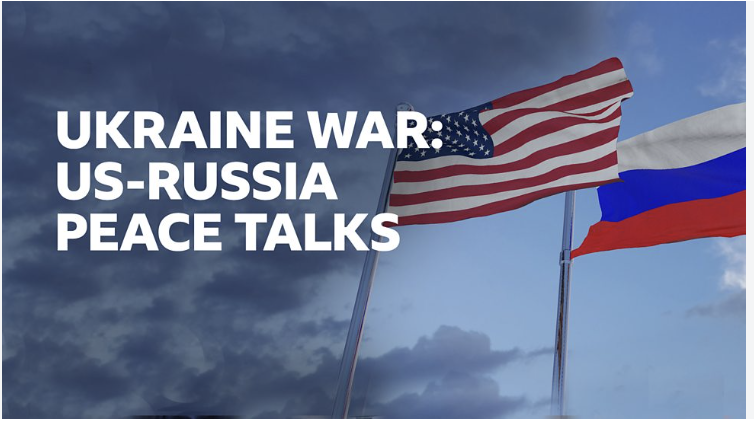
Source: BBC.co.uk
I Support President Trump’s Initiative to End the War in Ukraine and Lift Economic Sanctions Against Russia . Below are the reasons why:
Introduction: A new vision for peace, security, and economic cooperation
I believe President Trump has an opportunity to lead a change in direction: away from indefinite economic confrontation and toward diplomacy, accountability, energy security, and a negotiated peace. The European Union should seize that opportunity and work with the United States, Ukraine, and Russia to bring this war to an end.
I support President Donald Trump’s initiative to end the war in Ukraine and pursue the lifting of economic sanctions against Russia. I believe that his willingness to reconsider the established approach to Russia reflects an important recognition: the world is changing, international relationships are evolving, and the future of global security cannot be built exclusively on confrontation between Russia and the west. In a sense I feel like Ukraine is taking advantage of the European and for that prolonging the war . They have received many citizenship rights from the west and billions of dollars from the world as support and compensation.(they are not even EUmember ). The question is: Are they milking the cow ? President Trump is right . He is showing leadership and wisdom. Should we listen more carefully to what he just revealed about zelensky?.
My position is not that Russia should be excused from accountability or that Ukraine’s suffering should be ignored. Rather, I believe that a lasting peace requires an honest assessment of the interests, responsibilities, and security concerns of all parties. Continuing to finance a war while hoping that economic pressure alone will produce a satisfactory outcome is not a sufficient strategy for peace.
President Trump has an opportunity and he is applying it to change the direction of American policy by making the end of the war the principal objective, using economic diplomacy to encourage negotiations, and creating conditions in which Russia and the West can begin rebuilding a more stable relationship.
Larry Johnson’s presentation to the United Nations on October 14
The presentation by former CIA officer Larry C. Johnson at the United Nations on October 14, 2026, raises questions that deserve serious international attention.
Speaking at a Russia-convened Arria-formula meeting associated with the UN Security Council, Johnson argued that international assessments of the war should examine evidence of alleged violations by Ukrainian forces as well as those attributed to Russia. He questioned whether civilian casualties and allegations of mistreatment involving Russian prisoners of war had received sufficient attention in international reporting.
I agree with his concept that :”Every credible allegation of attacks against civilians, torture, mistreatment of prisoners, or obstruction of humanitarian assistance should be investigated. The same standards must apply to Russia and Ukraine.”
Johnson’s presentation does not, by itself, establish the truth of every allegation he discussed. However, it reinforces the need for independent investigations, transparent reporting, and an international approach that prioritizes evidence over political convenience.
Ukraine, corruption, and the responsibility to account for public money.
The European Union and its member states have committed substantial resources to supporting Ukraine. Such support creates an obligation to demonstrate clearly how public money is spent, how military assistance is monitored, and whether funds reach their intended recipients.
Ukraine has faced longstanding corruption challenges, and corruption risks during wartime deserve particular scrutiny. The existence of those risks does not establish that all Ukrainian officials are corrupt or that all international assistance has been misused. Nevertheless, the scale of wartime expenditure makes independent oversight essential.
There should be transparent audits of public funds, independent investigations of credible allegations of corruption, and effective measures to prevent the diversion of military equipment, humanitarian assistance, and financial support into illicit markets.
Russia and the west new world order.
Russia is a major international power with significant energy resources, military capabilities, geographic influence, and economic interests with coalitions in different parts of the world..
President Trump understands the importance of looking at the changing international landscape and reassessing policies that may no longer serve American interests effectively.
Recognizing Russia’s security concerns should therefore be part of negotiations. This does not give Russia an unrestricted right to determine the foreign policy of its neighbors or justify the use of force against them. It means that a sustainable agreement must address the security concerns of the relevant parties while respecting international law and Ukraine’s sovereignty.
Economic sanctions should be instruments of foreign policy, not permanent objectives in themselves.
I support President Trump’s use of executive authority to waive certain additional sanctions provisions, and I believe the United States should pursue further sanctions relief where it can advance a credible peace agreement. His October 16, 2026, executive order waived certain provisions of the newly enacted Lindsey O. Graham Sanctioning Russia and Iran Act while leaving existing sanctions imposed under earlier authorities in place. Economic restrictions can affect trade, investment, energy markets, businesses, and consumers. Energy policy should also form part of the discussion about the future relationship between Russia and the United States.
I support President Trump’s efforts to strengthen American energy production, protect American economic interests, and pursue commercial arrangements that could contribute to greater stability.
Europe must join Trump’s diplomatic initiative and End the war .
The European Union has faced the consequences of prolonged instability, substantial public expenditure, security concerns, and disrupted economic relationships.
I have been encouraged by public debate in Germany, Sweden, and other European countries about the costs of continued confrontation and the need to reassess Europe’s approach.
European governments should be willing to ask difficult questions. Is the current policy producing a realistic path toward peace? Are public funds being used effectively? Can a negotiated settlement reduce security risks while protecting Ukraine’s sovereignty? Could carefully designed sanctions relief and renewed economic dialogue contribute to a more stable European future?
Europe should not assume that supporting Ukraine requires rejecting every possibility of diplomatic engagement with Russia. Nor should diplomatic engagement be treated as a reason to disregard Ukraine’s security.The European Union can support Ukraine’s independence while also supporting negotiations that address Russia’s security concerns, establish credible guarantees, and reduce the risk of a wider conflict.
President Trump’s initiative is visionary because I believe the world needs a serious reconsideration of the policies that have prolonged the confrontation between Russia and the West.I support lifting economic sanctions as part of a credible diplomatic process, pursuing lawful energy and commercial agreements that serve American interests, demanding transparency from the Ukrainian government, and insisting that international humanitarian law be applied consistently to all parties.
