
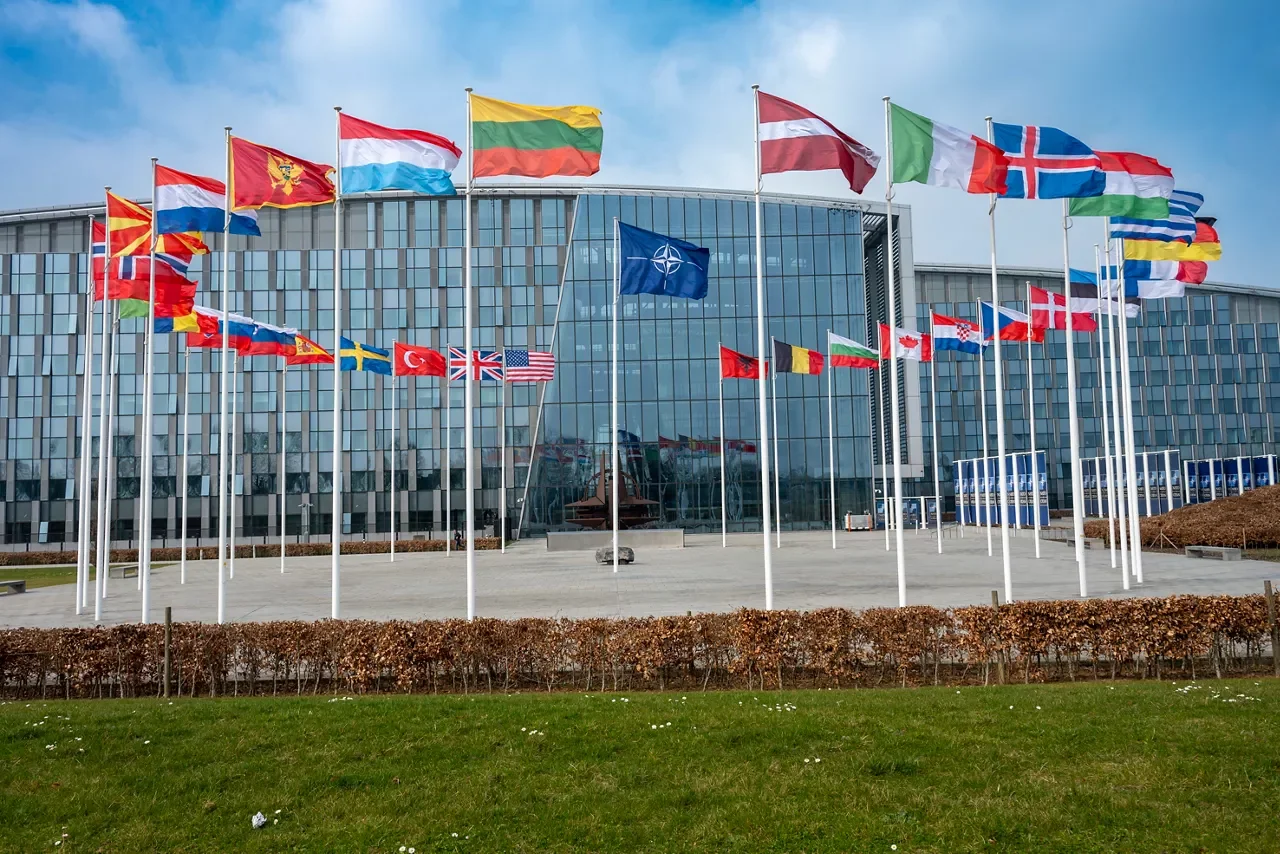
Source: nato.int/en
Personal opinion on security cooperation and international crisis in global governance academic research proposal .
1. Introduction and Rationale
Examine different perspectives on the issue of NATO impartiality and hegemony in the global governance regarding the conflict between Russia and Ukraine, including dominance of the US foreign policy. Historically, there is some evidence that argues that there were verbal assurances made during discussions between Western leaders and Russian officials in the 1990s, particularly regarding the reunification of Germany. The decision to include Eastern European countries was made by those nations themselves as they sought security and alignment with Western institutions after the Cold War. In my opinion Russia is not the enemy of the West . The alignment of Russia's security needs and position must be integrated with Europe's interests economically as well as socially globally .Reliance only on the Ukrainian verbal promises and begging to join the European Union is a total mistake, making Europe leaders on the wrong side of history .In my opinion we are witnessing an economic of war where Europe becoming a channel for Money transfer between the west and Ukraine by abusing the economic of war. In analogia “when husband and wife fighting the mistress being paid “.
2. Research Objectives
Historically and legally examine what promises were made in 1990? There is a need to examine archives of Germany, NATO and U.S. as to protocols and delegations of leaders during that time. The decision of Washington to bring Germany into NATO is a question of impartiality and hegemony in global governance.
Review documentary evidence regarding NATO expansion during the years since 1999 - 2009.
Examine the historical and conceptual evolution of impartiality in global governance in areas such as human rights, economic development, and conflict resolution.
Conclusions regarding the shifting political alignments, impartiality of the USA from one side, and the growing sides of the EU.
3. Research Questions
Did NATO promise Russia never to expand to the East and did the US breach its historic promises not to extend NATO on the border of Russia?
How has the Russian-Ukraine crisis impartiality been conceptualized in global governance under liberal hegemony?
In what ways does liberal impartiality reinforce global inequalities and exclusion in concern to treaties, legal agreements, and economic free-trade, such as oil and gas with Russia?
What are the economic benefits for Ukrainian citizens before and after the “war” and how much is being governed by the European Union ?
What global governance tools for the transfer of monies are being implemented in the Russia Ukraine war since 2022?.
4. Methodology
Conceptual Analysis: A critical review of literature from political theory and international relations will trace the evolution of impartiality within the liberal tradition and highlight its limitations.
Comparative Case Studies: Case studies from the protocols of NATO, since 1990, US General Secretary Protocols have appeared in the US Archive. Declassified treaties and legal agreements between NATO members, US and Russia.
Interviews and Expert Consultations: Interviews with scholars, legal experts, policymakers, and practitioners, in regards to protocols in the archive of Germany, USA and NATO, such as Helmut Kohl, German Chancellor from February 10th, 1990, Nato Secretary-General Manfred Woerner from July 1st, 1991 and protocol from the 16 NATO members, James Baker, US Secretary of State. Interview of the US Ambassador in Ukraine.
Review Documentation of: The economic effects in global governance regarding trading of oil and gas with Russia and Europe before and after the Ukraine war.
5. Conclusions :
A critique of liberal impartiality’s limitations in institutions such as in NATO, US, in relation to the Russia-Ukraine crisis and the historical view of global governance..
Policy recommendations for incorporating more inclusive models of impartiality into global governance, promoting fairness and justice in international decision-making.
Summary of the principle of economic war and the way to eliminate its benefits .
ALL RIGHTS RESERVED TO THE WRITER AND PUBLISHER LEELUSH.COM
END
